


Integrity Research
Integrity Research - BPC-157
Integrity Research - BPC-157
Couldn't load pickup availability
Integrity Research BPC-157 – Advanced Peptide for Tissue Repair & Recovery Research
BPC-157 (Body Protection Compound) is one of the most extensively studied synthetic peptides in regenerative and tissue-repair research. Derived from a naturally occurring gastric peptide sequence, BPC-157 has attracted significant scientific interest for its role in cell signaling, tissue integrity, and recovery-related pathways.
Integrity Research BPC-157 is produced for laboratory and research use only and is intended for professionals studying peptide signaling, connective tissue models, vascular response, and gastrointestinal integrity.
What Makes BPC-157 Unique in Peptide Research
Unlike many peptides that act on a narrow range of biological targets, BPC-157 is studied for its multisystem signaling profile. Research models suggest that it interacts with pathways involved in tissue repair coordination rather than functioning as a hormone or growth factor.
- Non-hormonal peptide structure – Does not function as a steroid, hormone, or stimulant.
- High stability – Demonstrates resistance to degradation in gastric and physiological environments.
- System-wide signaling relevance – Studied across musculoskeletal, vascular, and gastrointestinal research models.
- Extensive preclinical literature – Referenced in decades of animal and cellular research.
Mechanism of Action (Research Overview)
In laboratory studies, BPC-157 has been observed to interact with several biological signaling systems involved in tissue maintenance and repair. Rather than targeting a single mechanism, BPC-157 is investigated for its coordinated signaling.
- Angiogenesis signaling: Studied for its role in microcirculation and blood vessel response in damaged tissue models.
- Fibroblast and collagen pathways: Evaluated for relevance to tendon, ligament, and connective tissue structure.
- Inflammatory signaling modulation: Observed in cytokine and inflammation-response research.
- Cell migration coordination: Studied for directing cellular repair activity to areas of tissue stress.
This broad signaling profile is one reason BPC-157 remains a reference compound in regenerative peptide research.
Common Research Models & Study Contexts
BPC-157 has been investigated in a wide range of controlled laboratory settings, including:
- Muscle strain and tissue stress models
- Tendon and ligament load-response studies
- Joint and connective tissue degeneration research
- Gastrointestinal lining and ulceration models
- Vascular injury and circulation studies
These applications reflect research interest only and do not imply approved medical or therapeutic use.
BPC-157 Compared to Other Research Peptides
Within peptide research, BPC-157 is often compared to other recovery-focused compounds. Its distinguishing factor is functional breadth.
- Compared to TB-500: TB-500 is primarily studied for actin and cell migration, while BPC-157 is researched across connective tissue, vascular, and gastrointestinal pathways.
- Compared to growth-factor peptides, BPC-157 does not act as a growth hormone or IGF analogue.
- Compared with anti-inflammatory compounds, BPC-157 is studied for its effects on signaling balance and tissue coordination rather than for direct suppression of inflammation.
Supplement Facts
| Serving Size | 1 Capsule |
|---|---|
| Servings Per Container | 30 |
| BPC-157 Peptide | 500 mcg * |
* Daily Value not established.
Product Quality & Research Integrity
Integrity Research BPC-157 is manufactured with a focus on purity, consistency, and analytical reliability. Each batch is produced to meet strict research-grade standards.
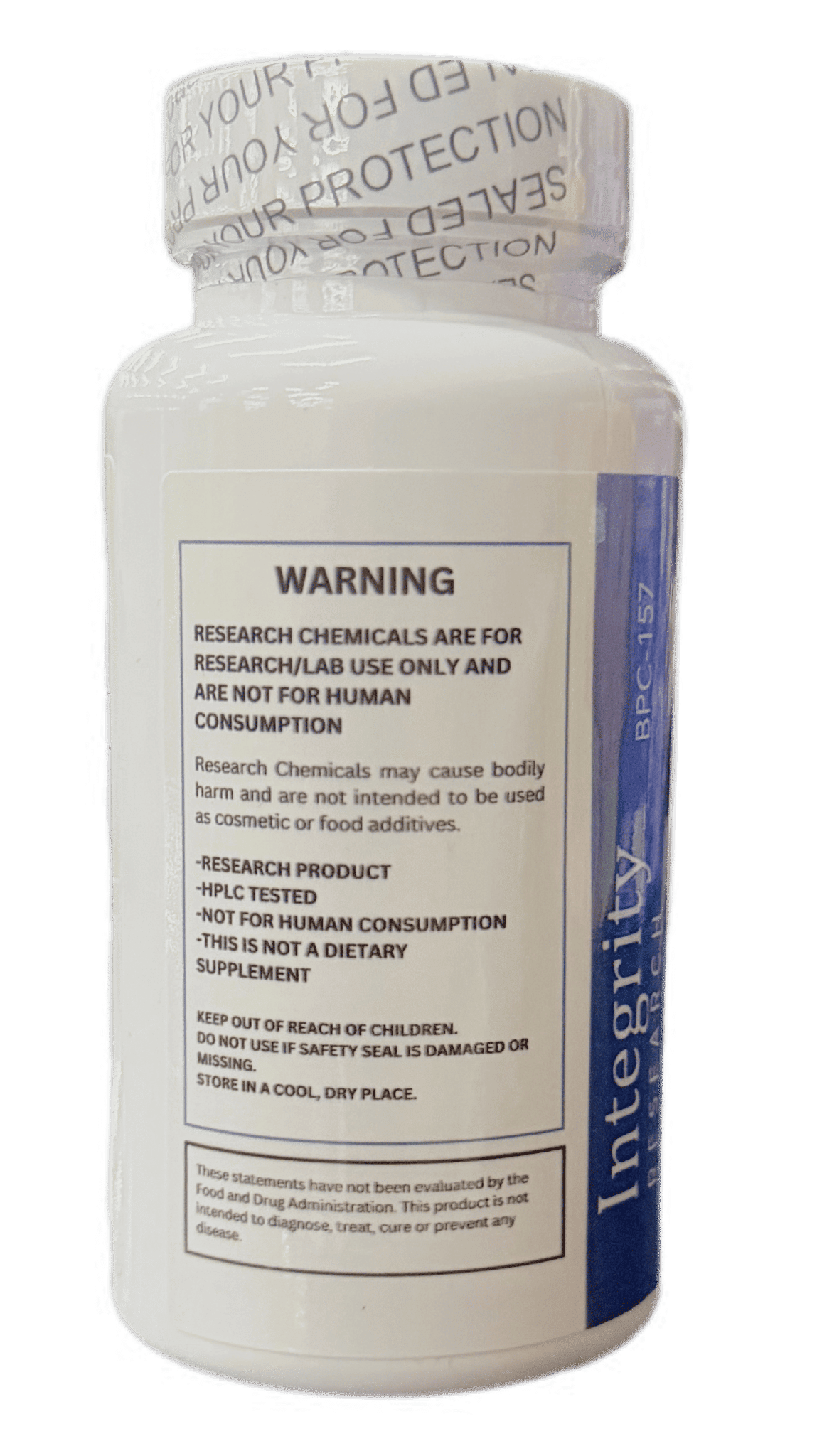
- Produced for laboratory and research use only
- Manufactured with controlled sourcing and handling
- Designed for reproducibility in experimental settings
Intended Use & Compliance Notice
This product is intended exclusively for qualified researchers, laboratories, and institutional research environments.
Not Intended For:
- Human consumption or self-experimentation
- Medical treatment or dietary supplementation
- Athletic or performance enhancement
- Veterinary or clinical application
Legal & Research Disclaimer
FOR RESEARCH PURPOSES ONLY. The FDA does not approve this product for human consumption, medical use, or dietary supplementation. It is not intended to diagnose, treat, cure, or prevent any disease.
By purchasing this product, you acknowledge that you are a qualified professional conducting legitimate research and assume full responsibility for compliance with all applicable laws and regulations.
Animal Supps makes no warranties, express or implied, regarding the safety, efficacy, or legality of this product outside of research use.
Frequently Asked Questions About BPC-157
What is BPC-157 commonly used for in a supplement context?
BPC-157 is a synthetic peptide modeled after a compound originally identified in gastric proteins. In supplement discussions, it is commonly referenced for its role in supporting tissue integrity, recovery processes, and cellular signaling related to repair. It is typically used by individuals placing high physical demands on muscles, tendons, and connective tissues.
How is BPC-157 typically incorporated into a routine?
Usage timing is often aligned with recovery-focused periods rather than pre-workout windows. Many users incorporate it consistently as part of a broader recovery or off-cycle support routine. Context such as training volume, rest days, and overall recovery strategy usually determines how it is integrated.
How long does it usually take to notice effects from BPC-157?
Experiences vary, but peptides like BPC-157 are generally discussed in terms of gradual support rather than immediate effects. Users often evaluate results over multiple weeks, paying attention to recovery quality and training consistency rather than short-term sensations.
Can BPC-157 be stacked with other recovery supplements?
BPC-157 is commonly discussed alongside foundational recovery supports such as amino acids, collagen-related nutrients, or sleep-focused supplements. Stacking decisions are typically based on avoiding redundancy and supporting complementary recovery pathways. It is usually not positioned as a stimulant or performance enhancer.
Is BPC-157 suitable for beginners?
BPC-157 is generally targeted toward more experienced users who already understand basic training recovery principles and supplement fundamentals. Beginners are often better served by addressing sleep, nutrition, hydration, and basic recovery supplements before exploring peptide-based options.
Are there tolerance concerns with BPC-157?
Peptides like BPC-157 are typically discussed in terms of cyclical or structured use rather than continuous indefinite intake. Users often monitor how their body responds over time and adjust usage accordingly within their overall recovery plan.
Does BPC-157 replace proper recovery habits?
No, BPC-157 is generally viewed as a supportive tool rather than a substitute for proper rest, nutrition, and training management. Its role is usually framed as complementary to foundational recovery practices, not a replacement for them.
Is BPC-157 associated with stimulation or energy effects?
BPC-157 is not commonly associated with stimulant-like effects or acute energy changes. It is typically discussed in the context of recovery, tissue support, and longer-term training sustainability rather than performance enhancement.
📍 Available at Animal Supps in Vineland, NJ. Located in Animal Paradise Gyms at the Cumberland Mall. Your trusted Supplement Store and Vitamin Shop, offering everything from Protein, Creatine, Peptides, Protein Snacks and more.
Serving New Jersey (North Jersey, South Jersey, Central Jersey, Jersey Shore) & the Philadelphia area.
Share


Frequently Asked Questions About BPC-157
What is BPC-157 commonly used for in a supplement context?
BPC-157 is a synthetic peptide modeled after a compound originally identified in gastric proteins. In supplement discussions, it is commonly referenced for its role in supporting tissue integrity, recovery processes, and cellular signaling related to repair. It is typically used by individuals placing high physical demands on muscles, tendons, and connective tissues.
How is BPC-157 typically incorporated into a routine?
Usage timing is often aligned with recovery-focused periods rather than pre-workout windows. Many users incorporate it consistently as part of a broader recovery or off-cycle support routine. Context such as training volume, rest days, and overall recovery strategy usually determines how it is integrated.
How long does it usually take to notice effects from BPC-157?
Experiences vary, but peptides like BPC-157 are generally discussed in terms of gradual support rather than immediate effects. Users often evaluate results over multiple weeks, paying attention to recovery quality and training consistency rather than short-term sensations.
Can BPC-157 be stacked with other recovery supplements?
BPC-157 is commonly discussed alongside foundational recovery supports such as amino acids, collagen-related nutrients, or sleep-focused supplements. Stacking decisions are typically based on avoiding redundancy and supporting complementary recovery pathways. It is usually not positioned as a stimulant or performance enhancer.
Is BPC-157 suitable for beginners?
BPC-157 is generally targeted toward more experienced users who already understand basic training recovery principles and supplement fundamentals. Beginners are often better served by addressing sleep, nutrition, hydration, and basic recovery supplements before exploring peptide-based options.
Are there tolerance concerns with BPC-157?
Peptides like BPC-157 are typically discussed in terms of cyclical or structured use rather than continuous indefinite intake. Users often monitor how their body responds over time and adjust usage accordingly within their overall recovery plan.
Does BPC-157 replace proper recovery habits?
No, BPC-157 is generally viewed as a supportive tool rather than a substitute for proper rest, nutrition, and training management. Its role is usually framed as complementary to foundational recovery practices, not a replacement for them.
Is BPC-157 associated with stimulation or energy effects?
BPC-157 is not commonly associated with stimulant-like effects or acute energy changes. It is typically discussed in the context of recovery, tissue support, and longer-term training sustainability rather than performance enhancement.